
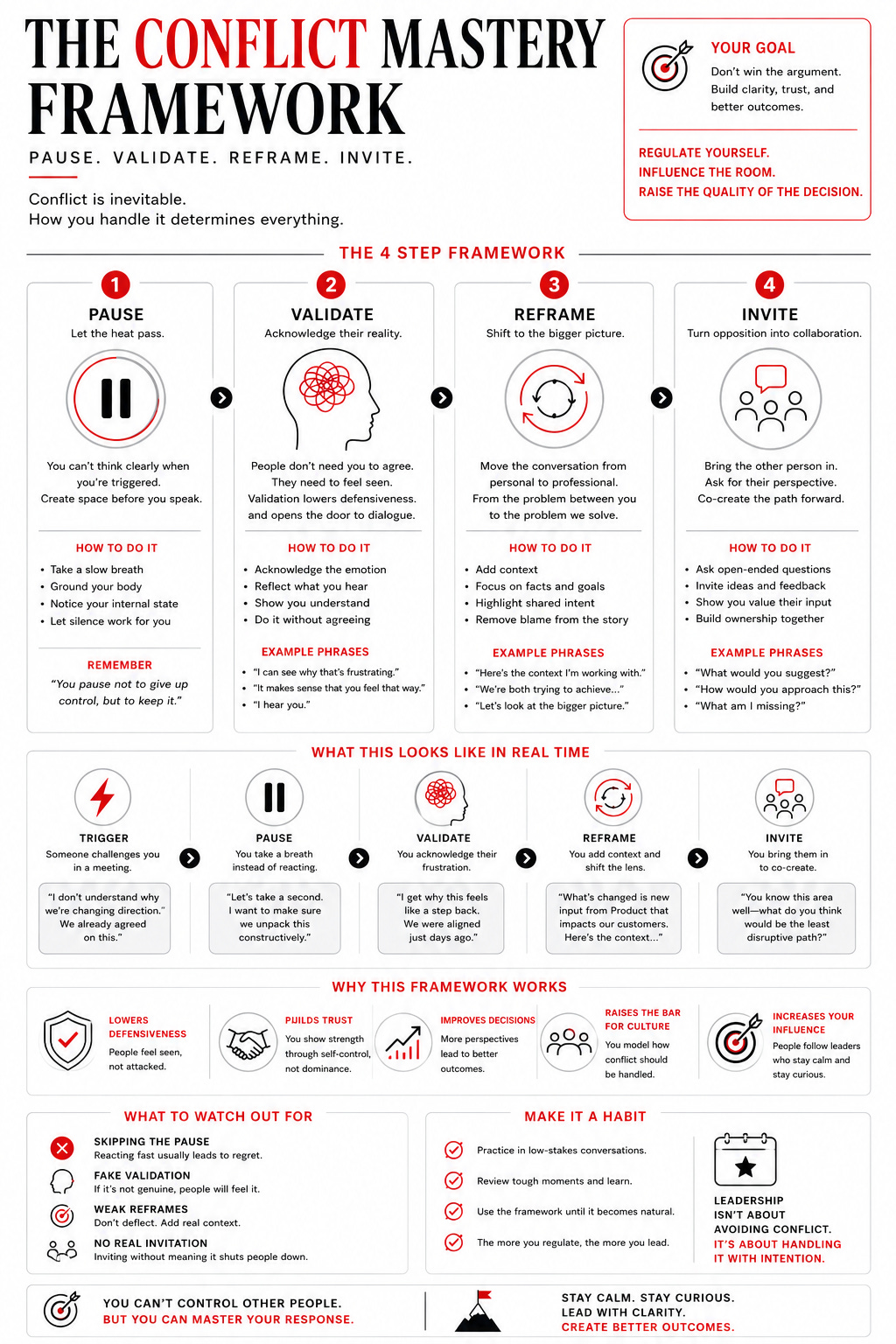
Pause. Validate. Reframe. Invite.
Stay calm. Lead clearly. Handle tension without losing yourself.
Conflict will always exist.
The difference isn’t whether tension appears.
It’s whether you react automatically…
or respond intentionally.
Most leaders don’t lose trust in massive blowups.
They lose it in small emotional reactions:
defensiveness
urgency
ego protection
shutting people down
needing to be right
This framework helps you slow the moment down before it controls you.
The 4 Steps
1. Pause
Create space before reacting.
Your nervous system wants speed.
Leadership requires clarity.
A short pause interrupts emotional momentum.
2. Validate
Acknowledge their experience without surrendering your position.
People calm down when they feel understood.
Validation lowers defensiveness.
It doesn’t mean agreement.
3. Reframe
Move the conversation away from ego and back toward the real problem.
Shift from:
me vs you
to:
us vs the issue
Bring context.
Shared goals.
Reality.
4. Invite
Turn resistance into collaboration.
Ask:
“What might I be missing?”
“How would you approach this?”
“What’s the best path forward here?”
Strong leaders don’t need dominance to feel safe.
When to Use This
In a tense meeting
After pushback
During conflict between teams
When your authority feels challenged
When urgency takes over
Before replying emotionally
Why This Works
Under pressure, the brain defaults to protection.
This framework:
interrupts reactivity
regulates emotion
lowers defensiveness
improves decision quality
creates psychological safety
The Shift
It’s not about avoiding conflict.
It’s about staying regulated inside it.
Because emotional control shapes:
trust
culture
communication
decision quality
the honesty inside the room
Final Thought
Anyone can stay calm when things are calm.
Leadership becomes visible when tension enters the room.
The strongest leaders are not the ones who never get triggered.
They’re the ones who notice the trigger…
without handing it control.