When Your Team Feels Like Family, and Why That Can Cost You as a Leader

One of the easiest things to happen in leadership and one of the hardest to notice is getting attached to your team.
It rarely starts as a mistake.
It usually starts as care.
You build something together. You go through pressure, deadlines, late nights, and moments that only the people in the room truly understand. Over time, work stops being just work. Conversations become more personal. Trust deepens. The bond feels real.
At some point, the team no longer feels like a team.
It starts to feel like your people.
That is where things become complicated.
The moment you become someone’s manager, the relationship changes permanently. Not emotionally, but structurally. Even if you never intended it to. Even if you feel like the same person.
You may still joke the same way.
You may still go for drinks after work.
You may still talk about family, kids, and life outside the office.
But there is now something in the room that was not there before. Authority.
What makes this difficult is that the other person may not be aware of how much that authority changes their behavior. They may want a friendly relationship. They may enjoy the closeness. And without realizing it, they may start adapting. Agreeing more. Filtering less. Holding back uncomfortable truths.
They did nothing wrong.
And neither did you.
The difference is responsibility.
You are the one who must notice when attachment starts influencing judgment. You are the one who must stay aware of how the dynamic shifts once you are in a leadership role.
This is not an argument against being human as a leader.
It is an argument against pretending the professional dynamic does not exist.
Because the cost does not show up when things are easy.
It shows up later. When feedback needs to be honest. When decisions become uncomfortable. When clarity matters more than closeness.
That is the line high EQ leaders learn to see.
And learn to hold.
The Uncomfortable Truth About Power Dynamics
Once you step into a leadership role, the relationship with your team is never fully equal again.
That does not mean it cannot be warm.
It does not mean it cannot be close.
But it does mean it is no longer symmetrical.
You carry responsibility they do not. You influence decisions they do not. Your words carry a different weight, even when you speak casually. Even when you think you are just sharing an opinion.
This is where many leaders get confused.
They feel like the relationship is the same because the emotional connection is still there. The jokes still land. The conversations still flow. The trust still feels mutual.
But structure always beats intention.
The presence of authority changes how people show up, whether they want it to or not. People start measuring their words more carefully. They read into tone. They wonder how much honesty is safe.
Not because they are manipulative.
Not because they are afraid.
But because they are human.
And here is the part that is easy to miss.
Your team member might genuinely want a friendly relationship with you. They might even believe it is completely natural. At the same time, they may not be aware of how much they have adjusted themselves around your role.
They laugh a bit louder.
They disagree a bit less.
They bring fewer unfinished thoughts.
From your perspective, everything still feels open and relaxed.
From theirs, it may slowly become filtered.
This is not a failure of trust.
It is a consequence of power.
High EQ leadership begins with accepting this reality instead of resisting it. Not trying to erase the dynamic. Not pretending it does not exist. But learning to lead within it consciously.
Because the moment you ignore power dynamics is the moment they start working against you.
When Attachment Starts Affecting Decisions
Attachment rarely announces itself.
It does not show up as favoritism.
It does not look like bias.
It feels like consideration.
You start thinking a bit longer before speaking. You choose softer words. You delay conversations that you know are coming anyway. Not because you lack clarity, but because you care about how the other person will feel.
This is usually the moment leaders tell themselves they are being empathetic.
Sometimes they are.
Sometimes they are just avoiding discomfort.
The line between the two is thin.
Attachment begins to affect decisions when clarity becomes negotiable. When fairness starts competing with closeness. When the relationship quietly enters the decision making process.
You might notice it when performance drops, but you hesitate to address it directly. When feedback becomes vague instead of specific. When expectations are lowered rather than clarified.
Not because you want to protect yourself.
But because you want to protect the relationship.
This is where high EQ leadership is often misunderstood.
Emotional intelligence is not about reducing discomfort at all costs. It is about choosing the right discomfort at the right time.
Avoiding clarity does not preserve trust. It slowly erodes it.
The person on the other side may feel something is off. They sense the hesitation. They notice the softened message. And instead of feeling supported, they feel uncertain.
Uncertainty is heavier than honest feedback.
When leaders let attachment guide decisions, they do not become kinder. They become less predictable. Less fair. Less trustworthy.
And the cost is rarely immediate.
It shows up later. In confusion. In resentment. In a quiet loss of respect that no one names out loud.
This is the moment where many leaders realize that caring deeply is not enough.
They must also lead clearly.
The Hardest Moment: Feedback After Closeness
There is a specific moment in leadership that exposes everything.
It is not a crisis.
It is not a failure.
It is a conversation.
Yesterday, you were joking. You were relaxed. You were human together. Maybe you had a drink after work. Maybe your kids met in the park. Maybe the relationship felt easy and natural.
Today, you need to talk about performance.
This is the moment where many leaders freeze.
They replay the last interaction in their head. They wonder if the feedback will feel like betrayal. They worry that the relationship will change. They fear being seen as unfair or cold.
So they adjust.
They soften the message.
They wrap the point in too much context.
They hint instead of naming.
The intention is good.
The outcome rarely is.
When feedback is unclear, people do not feel protected. They feel confused. They leave the conversation unsure where they stand. And uncertainty creates more stress than honesty ever could.
The uncomfortable truth is this.
The relationship already changed the moment you became their leader. Avoiding clarity does not preserve closeness. It just replaces trust with ambiguity.
High EQ leaders understand that kindness is not the absence of discomfort. It is the willingness to be honest without cruelty and clear without defensiveness.
You can acknowledge the human bond and still speak directly. You can care and still hold standards. You can be warm and still be real.
The damage happens when leaders try to be liked instead of being truthful.
Because eventually, the truth finds its way out.
And when it does, it often hurts more than it needed to.
What High EQ Leadership Looks Like in These Moments
High EQ leadership is often misunderstood here.
It is not emotional distance.
It is not cold professionalism.
It is not pretending relationships do not exist.
It is the ability to hold warmth and structure at the same time.
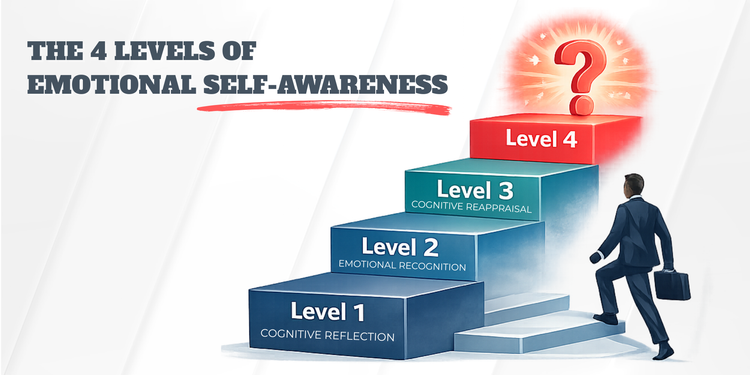
To do that consistently, leaders need a frame they can return to when emotions blur judgment.
I use a simple one.