

We like to believe we see people clearly.
That when someone delays, reacts a certain way, or behaves “off,” our interpretation is grounded in facts.
But it rarely is.
Most of what you think about someone is not truth.
It’s interpretation.
Filtered through your own expectations, pressure, past experiences, and internal state.
And at your level — as a CEO or senior leader — that becomes dangerous.
Because your interpretation doesn’t stay in your head.
It turns into decisions.
Why This Matters More Now Than Ever
A few years ago, a misjudgment might affect one conversation.
One person. One decision.
Today?
In an AI-driven environment, everything moves faster.
Decisions are made quicker
Information is processed at scale
Outputs get amplified across teams instantly
Which means:
👉 Your internal state doesn’t just influence a moment. It scales across your entire company.
A wrong interpretation today can:
derail a strategic decision
create tension at the leadership level
shift how entire teams align and execute
Not because of data.
But because of how you interpreted it.
The Leadership Trap No One Talks About
As leaders rise, something subtle happens.
They stop questioning their own perception.
They trust their judgment more.
They rely on experience.
They move faster.
Which is necessary.
But it also creates a blind spot.
You stop being curious.
You start labeling.
“He’s slow.”
“She’s not engaged.”
“They don’t get it.”
And from there, decisions follow.
Distance grows.
Trust erodes.
Performance drops.
Not because your people are wrong.
But because your interpretation was incomplete.
A Moment That Changed How I Lead
Early in my leadership career, I had a team member who always delivered work at the last minute.
I interpreted it quickly:
Careless. Disorganized. Not serious enough.
I was ready to confront him.
But something made me pause.
Instead of reacting, I asked:
“What’s going on?”
He looked at me and said:
“I review everything three times before I send it. I’m afraid of delivering something that’s not perfect.”
Same behavior.
Completely different reality.
It wasn’t carelessness.
It was pressure. Fear. Responsibility.
That moment stayed with me.
Because it made something very clear:
What you see is rarely the full story.
Now Scale That to a CEO Level
At your level, the stakes are different.
You’re not interpreting one team member.
You’re interpreting:
your leadership team
co-founders
board dynamics
strategic signals
And you’re doing it fast.
Often under pressure.
Often without full context.
Now add AI into the mix.
You have more data than ever.
More dashboards. More signals. More inputs.
But here’s the paradox:
👉 More information doesn’t remove bias. It amplifies it.
You still choose what to focus on.
You still interpret what it means.
You still decide how to act.
AI doesn’t replace judgment.
It scales it.
The Hidden Cost of Misjudgment
Most leaders don’t realize how expensive this becomes.
Not immediately.
But over time.
A misinterpreted behavior leads to:
unnecessary tension in leadership meetings
hesitation in decision-making
erosion of authority
loss of trust at the top
And here’s the hardest part:
You rarely connect the outcome back to the original assumption.
You just see:
“alignment issues”
“execution problems”
“team not stepping up”
When in reality:
👉 it started with how you read the situation
The Projection Trap
Carl Jung said:
“Everything that irritates us about others can lead us to an understanding of ourselves.”
In leadership, this shows up constantly.
If you value speed, reflection looks like hesitation
If you value structure, flexibility looks like chaos
If you value autonomy, collaboration can feel like dependency
You’re not seeing the person.
You’re seeing your own values — projected onto them.
And under pressure, this intensifies.
Because you don’t have time to question it.
You react.
Where AI Makes This Worse
AI doesn’t introduce bias.
It accelerates the consequences of it.
You make a call based on your interpretation.
That decision gets implemented faster.
Communicated wider.
Executed at scale.
There’s less friction. Less delay.
Which sounds efficient.
Until the decision was based on a misread.
Then you’re not just wrong.
👉 You’re wrong faster, and at scale.
What Leadership Actually Requires Now
At this level, leadership is not about being right.
It’s about seeing clearly under pressure.
Which means:
questioning your own interpretation
slowing down at the right moments
staying curious when your instinct is to conclude
Not all the time.
But in the moments that matter.
A Simple Shift That Changes Everything
Instead of asking:
“What’s wrong with them?”
Ask:
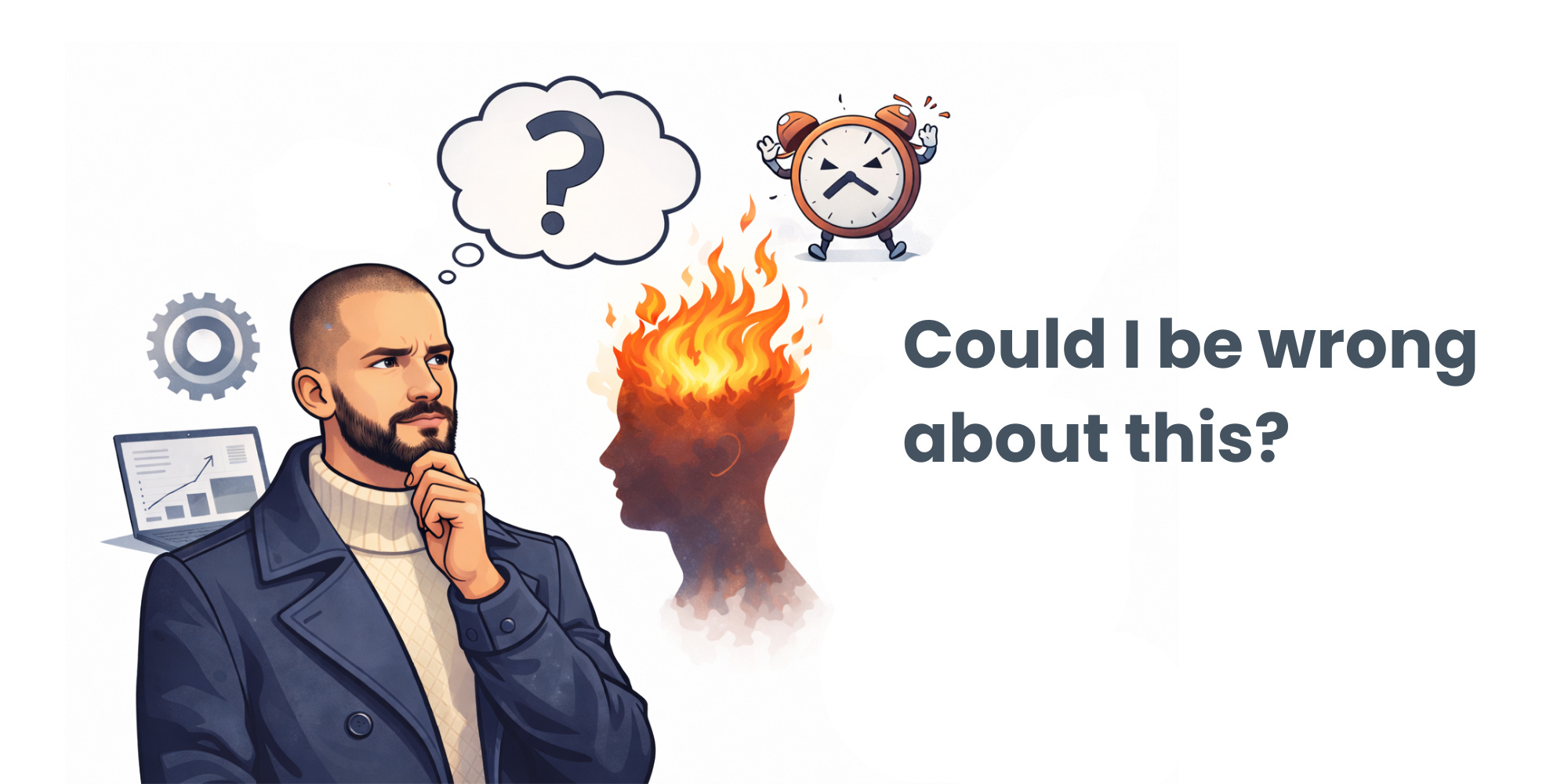
👉 “What might I be missing?”
That single question:
reopens curiosity
reduces reactivity
changes the tone of the conversation
You stop trying to fix people.
You start trying to understand them.
And that’s where real leadership begins.
How This Plays Out in Real Situations
A CEO I worked with was frustrated with his leadership team.
He felt they weren’t stepping up.
Meetings were tense.
Decisions were revisited.
Progress felt slow.
His interpretation:
“They lack ownership.”
But when we slowed down and looked deeper:
expectations weren’t fully clear
tension wasn’t addressed directly
some team members were operating under silent pressure
Once he saw that, everything shifted.
He changed how he approached conversations.
Clarity improved.
Tension surfaced and got resolved.
Ownership followed.
Not because the team changed first.
👉 Because his interpretation did.
Leading Without Projection
This doesn’t mean you avoid accountability.
It means you build it on top of understanding.
Great leaders:
ask before they assume
clarify before they correct
reflect before they react
And most importantly:
👉 they question their own perception
A Practical Framework to Pause Judgment
Next time something triggers you, pause for a moment.
Run this internally:
What are the facts?
(What actually happened — not what I think it means)What am I assuming?
(What story am I adding on top)What else could be true?
(Alternative explanations)Have I asked them directly?
(Or am I operating on interpretation alone)
This takes less than a minute.
But it can prevent weeks of misalignment.
The Real Work at the Top
At this level, the game changes.
It’s no longer about:
knowing more
working harder
optimizing processes
It’s about:
👉 how you think under pressure
Because that’s what shapes every decision.
And today, those decisions travel faster than ever.
Final Thought
Your judgment feels real.
It feels accurate.
It feels justified.
But it’s not the truth.
It’s your perspective — shaped by pressure, experience, and state.
And in an AI-driven world, where everything moves faster and scales wider:
that perspective becomes one of the most expensive variables in your business
So before you react, decide, or label:
Pause.
And ask yourself:
“Am I seeing the full picture — or just my version of it?”